
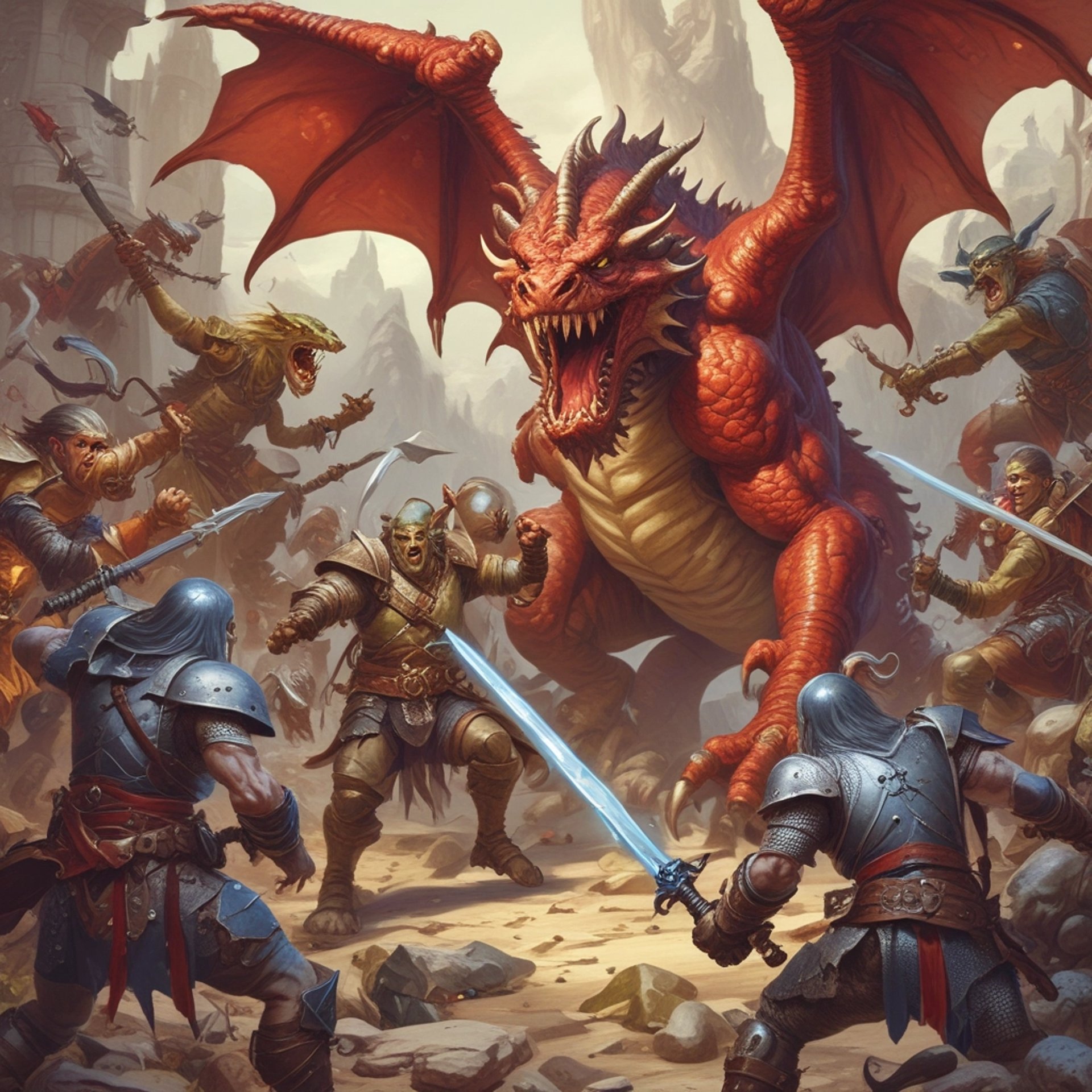
Combat Guide
Master your D&D 5e battles with clear turn order and roll rules.
Combat Basics
⚔️ COMBAT RULES
Combat in this system is fast, clear, and built around two core actions:
Weapon Attacks
Rites (your abilities)
Each turn, you choose how to mix these options to control the battlefield.
⭐ TURN STRUCTURE
🔋 RITE USES PER REST
🎲 ROLLING BASICS
Attack Roll (Weapons)
d20 + STR or DEX + Proficiency (if proficient)
Hit if you meet or beat the target’s AC.
Damage Roll
Use the damage die of your weapon
(e.g., 1d8 for longsword, 1d12 for greataxe).
Rite Roll
To activate a Rite, roll:
d20 + Main Stat Modifier + Proficiency Bonus
Special Creatures and Bosses may make saving throws to reduce or negate Rite effects
If you meet or beat the Rite check (DC 12) → The Rite activates.
If not → The action ends.
On your turn, you may:
1. Move as many times as needed (up to your speed)
2. Take ONE main action:
Weapon Attack
Cast a Rite (If the Rite augments a Weapon Attack - you roll both a Weapon Attack then a Rite Attack)
Use an item
Interact with something (pick up item, open door, etc.)
3. Take ONE optional minor action:
Switch weapons
Drink potion
Throw potion (Dex check, DC based on length / difficulty
Communicate briefly
Rites are powerful, so they require recovery.
Per Rest
Level 1 Rites: 5 total uses
Level 3 Rites: 3 total uses
You can use a higher level Rite to use a lower level Rite.
Example:
If you cast five Level 1 Rites in a day, you are out of Level 1 uses until you rest.
📘 ENDING YOUR TURN
Your turn ends when:
You finish moving
You finish your one main action
You finish your minor action
You declare the turn over
At end of turn:
Rites with duration expire
Combat Examples
Example 1 — Simple Martial Turn
Breakbound takes their turn:
Move
Weapon attack with greataxe (no Rite used)
Finish movement
Example 2 — Controlled Casting
Example 3 — Resource Pressure
Bard has used:
4 Level 1 Rites
1 Level 3 Rite
They can still fight with weapons and class features,
but need a Rest to recover their low-tier support toolkit.
Symphonic Mage uses a Level 3 Rite:
Cast one Level 3 Rite
Uses 1 of the 3 Level 3 uses
FAQ
What is a Rite?
A Rite is your character’s special abilities.
It could be an attack, a buff, a debuff, a movement technique, or a utility skill.
Unless it is a Passive Skill, you must pass a Rite Test (d20 + Modifier + Proficiency) to activate it.
Do enemies get saving throws or AC checks against Rites?
What is the DC for a Rite?
All Rites use:
DC 12
You roll:
d20 + Main Stat Modifier + Proficiency Bonus – Rite Penalties
If you meet or beat 12, the Rite succeeds.
Usually no.
Rites succeed or fail based solely on your Rite Test.
Exceptions:
If a Rite includes a weapon attack → use enemy AC.
Special and Legendary monsters may get special saving throws.
What happens if my character is silenced, stunned, or disrupted?
You cannot cast Rites while:
Stunned
Paralyzed
Silenced (if the Rite is verbal)
Restrained (only if the Rite requires movement or physical motion)
Rites that are purely mental or magical (no movement required) can still be cast while restrained.
Weapon Types
Simple weapons
Basic, common, easy to learn.
Examples:
Dagger, club, staff, spear, handaxe, mace
Sling, light crossbow
Martial weapons
Require training, more deadly/versatile.
Examples:
Longsword, greatsword, battleaxe, greataxe
Warhammer, halberd, glaive
Longbow, heavy crossbow
Finesse weapons
You can use STR or DEX for attack rolls.
Examples:
Dagger, shortsword, rapier
Ranged weapons
Use DEX.
Examples:
Shortbow, longbow, crossbows, sling
What are “specialized tools”?
These are non-weapon gear used for skilled tasks—stuff your character has training in.
Depending on the situation, they can allow advantage or bonuses to checks.
Think:
Crafting (INT / DEX)
Repair (INT / STR)
Medicine (WIS)
Investigation (INT)
Survival (WIS)
Performance (CHA)
Magical / Ritual Support (Main Stat)
Examples of specialized tools
Thieves’ Tools (DEX / INT) — picking locks, disarming traps
Healer’s Kit (WIS) — stabilize allies, treat wounds
Smith’s Tools (STR / INT) — forge, repair armor and weapons
Tinker’s Tools (INT / DEX) — gadgets, delicate mechanisms
Herbalism Kit (WIS / INT) — potions, salves, natural remedies
Alchemist’s Supplies (INT) — bombs, chemicals, reactions
Navigator’s Tools (INT / WIS) — maps, navigation, travel
Cook’s Tools (WIS / CON) — meals, buffs, camp support
Additional Tools
Cartographer’s Tools (INT) — mapmaking, tracking terrain
Disguise Kit (CHA) — impersonation, deception
Forgery Kit (INT / DEX) — documents, seals, writing
Poisoner’s Kit (INT / DEX) — toxins, coatings
Calligrapher’s Tools (DEX / INT) — precise writing, magical scripts
Musical Instrument (CHA) — performance, influence, Bard synergy
Artisan’s Tools (INT / DEX) — crafting specialty goods
Fishing Gear (WIS) — gathering food, survival
Hunting Kit (WIS / DEX) — tracking and catching prey
Climbing Gear (STR / DEX) — scaling terrain safely

